Porcelain vs Ceramic Tiles
Which Is Better for Your Home?
Choosing the right tiles for your home is more than just picking a design that looks good—it's about balancing style, durability, maintenance, and budget. As a trusted ceramic and porcelain tiles manufacturer brand in India , we at Granitogres Global understand how important this decision is. Among the most popular tile options today, porcelain and ceramic tiles stand out as top choices for homeowners, architects, and interior designers alike. But while they may look similar at first glance, the differences between them can significantly impact your home's long-term performance and appearance.
So, which one is actually better for your home? The answer depends on where you're using the tiles, how much traffic the area gets, your design preferences, and your budget. In this guide, we'll break down everything you need to know about porcelain and ceramic tiles so you can make a confident decision.
What is the Difference Between Porcelain and Ceramic Tiles?
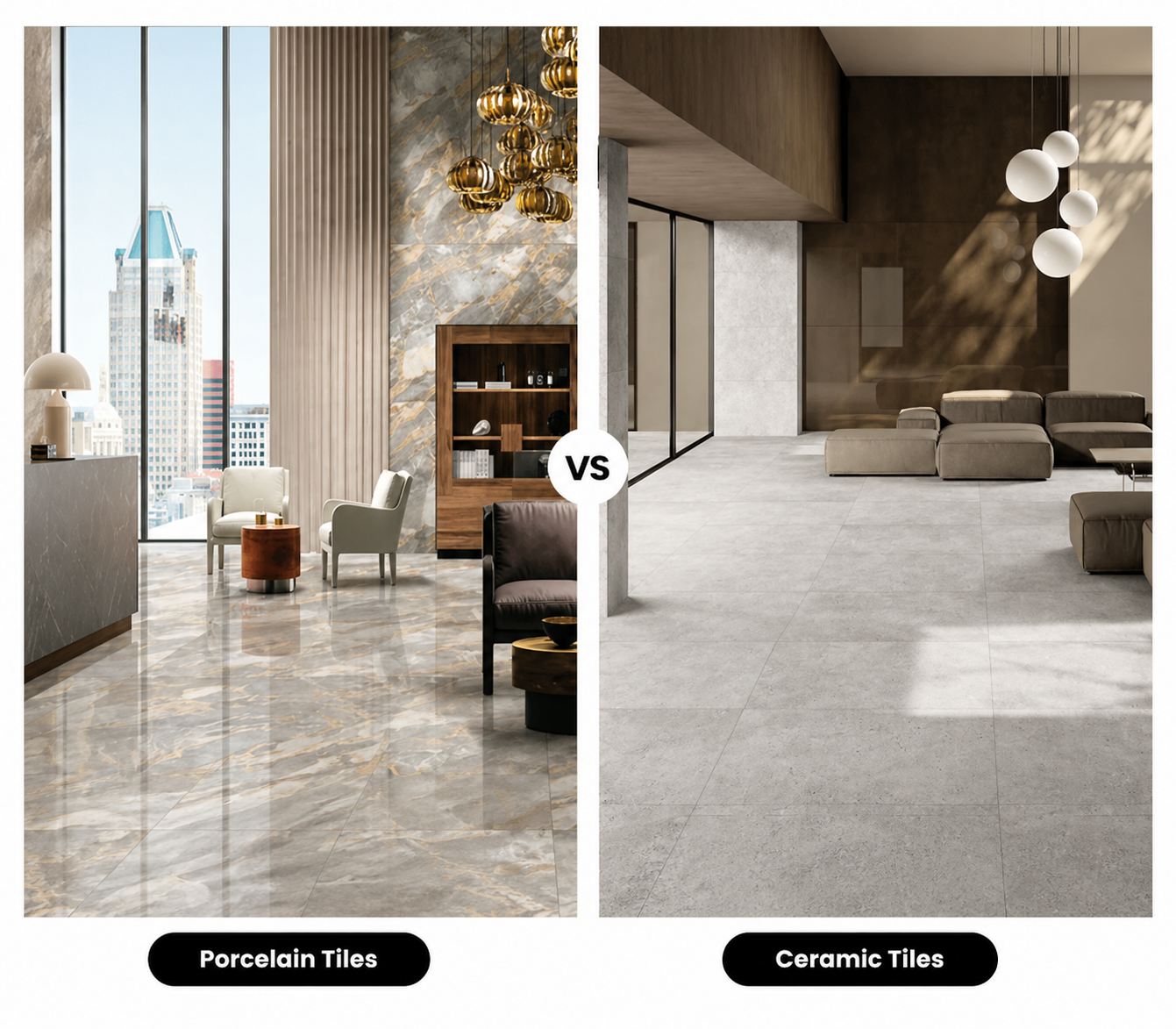
Both porcelain and ceramic tiles are made from clay and natural materials, but the manufacturing process is what sets them apart.
Ceramic Tiles
Ceramic tiles are crafted from red, brown, or white clay and fired at relatively lower temperatures. Because of this, they are slightly softer and more porous compared to porcelain tiles. Ceramic tiles are often coated with a durable glaze that gives them color, texture, and water resistance.
They are widely used for indoor spaces, especially walls and low- traffic areas, because they are affordable, versatile, and available in countless designs.
Porcelain Tiles
Porcelain tiles are made from finer, more refined clay and fired at much higher temperatures. This process creates a denser, harder, and less porous tile. Porcelain is known for its superior strength, water resistance, and ability to mimic natural materials like wood, marble, and stone with impressive realism.
Because of these qualities, porcelain tiles are often preferred for both indoor and outdoor use, particularly in high- traffic or moisture- prone spaces.
Porcelain vs Ceramic Tiles: Detailed Comparison
1. Durability and Strength
When it comes to durability, porcelain tiles generally outperform ceramic tiles.
Porcelain’s dense structure makes it highly resistant to:
• Heavy foot traffic
• Scratches and wear
• Cracks under pressure
• Moisture damage
This makes porcelain ideal for living rooms, hallways, kitchens, commercial spaces, and outdoor
areas.
Ceramic tiles are durable too, but they are comparatively softer and can chip more easily if subjected to heavy impact.
Verdict:
Porcelain tiles are better for long-term durability and demanding spaces.
2. Water Resistance and Moisture Performance
One of the biggest advantages of porcelain tiles is their low water absorption rate—typically less
than 0.5%. This means they are highly resistant to moisture and are excellent for:
• Bathrooms
• Kitchens
• Outdoor patios
• Balconies
• Laundry areas
Ceramic tiles, while still moisture-resistant when glazed, absorb more water than porcelain and are better suited for dry indoor spaces.
Verdict:
Porcelain is the clear winner for wet and humid environments.
3. Appearance and Design Flexibility
Both tile types come in a wide range of designs, colors, and finishes, but porcelain often leads in premium aesthetics.
Porcelain:
• Realistic wood-look finishes
• Marble-inspired luxury surfaces
• Stone textures
• Matte, glossy, and anti-slip finishes
Ceramic:
• Decorative wall patterns
• Vibrant colors
• Artistic backsplashes
• Budget-friendly stylish designs
Modern digital printing technology has elevated both categories, but porcelain often provides a more luxurious and natural-material appearance.
Verdict:
Porcelain offers premium realism, while ceramic provides creative affordability.
4. Installation and Workability
Ceramic tiles are easier to cut and install because they are softer. This can reduce labor costs and installation time.
Porcelain tiles, due to their density, require specialized tools and experienced installers. This often increases installation costs.
Verdict:
Ceramic tiles are more installer-friendly and cost-effective for simpler projects.
5. Cost Comparison
Budget is often a deciding factor.
Ceramic Tiles:
• Lower material cost
• Lower installation cost
• Great for large renovations on a budget
Porcelain Tiles:
• Higher upfront investment
• More expensive installation
• Better long-term value due to durability
Verdict:
Ceramic is ideal for budget-conscious homeowners, while porcelain offers better
performance over time.
Best Applications for Each Tile Type
Where Porcelain Tiles Work Best:
Living Rooms: Porcelain tiles provide elegance, strength, and resistance to daily wear.
Kitchens: Their stain resistance and durability make them practical for spills and heavy movement.
Bathrooms: Superior water resistance makes porcelain perfect for floors and walls.
Outdoor Areas: Porcelain handles weather changes better than ceramic.
Where Ceramic Tiles Work Best:
Bedroom Walls: Affordable and decorative.
Kitchen Backsplashes: Easy to clean and stylish.
Accent Walls: Ideal for colorful or textured designs.
Low-Traffic Bedrooms: A practical budget solution.
Maintenance: Which Is Easier?
Both porcelain and ceramic tiles are relatively easy to maintain, but porcelain edges ahead due to its density.
Porcelain:
-
Less likely to stain
-
Lower moisture absorption
-
Requires minimal maintenance
Ceramic:
-
Easy to clean
-
Slightly more vulnerable to chipping
-
Grout may need more attention in wet areas
Verdict: Porcelain requires less long-term maintenance.
Environmental Considerations
If sustainability matters to you, both porcelain and ceramic tiles can be eco-friendly depending on the manufacturer. However, because porcelain lasts longer, it may reduce replacement frequency over time.
Porcelain vs Ceramic Pros and Cons Summary
Porcelain Tiles
Pros:
-
Highly durable
-
Water-resistant
-
Premium appearance
-
Suitable for indoor & outdoor use
-
Low maintenance
Cons:
-
Higher cost
-
More difficult installation
Ceramic Tiles
Pros:
-
Affordable
-
Easier to install
-
Wide variety of designs
-
Great for walls and light-use spaces
Cons:
-
Less durable
-
More porous
-
Not ideal for heavy-duty or outdoor use
Final Verdict: Which Tile Should You Choose?
Choose Porcelain Tiles If: You want a high-end, durable, moisture-resistant solution that can withstand heavy use and maintain its beauty for years.
Choose Ceramic Tiles If: You're working with a tighter budget, focusing on decorative indoor applications, or renovating areas with lighter foot traffic.
For most homeowners looking for the best all-around option, porcelain tiles are often the superior choice thanks to their durability, water resistance, and premium design potential. They may cost more initially, but their longevity often makes them a smarter investment.
However, ceramic tiles remain an excellent option for stylish, affordable interior spaces where extreme durability isn't essential.
Transform Your Home with the Right Tile Choice
Your tiles are more than just a surface—they shape your home's style, comfort, and long-term maintenance. Whether you prioritize luxury, practicality, or budget, understanding the difference between porcelain and ceramic ensures you choose the perfect fit for every room.
Invest wisely, design beautifully, and create spaces that truly last.